
Freedom in America: What Does Freedom Require of Us?
At GVL Connect, everyone agreed that freedom matters. The harder question was what freedom means when one person's liberty collides with another person's rights.
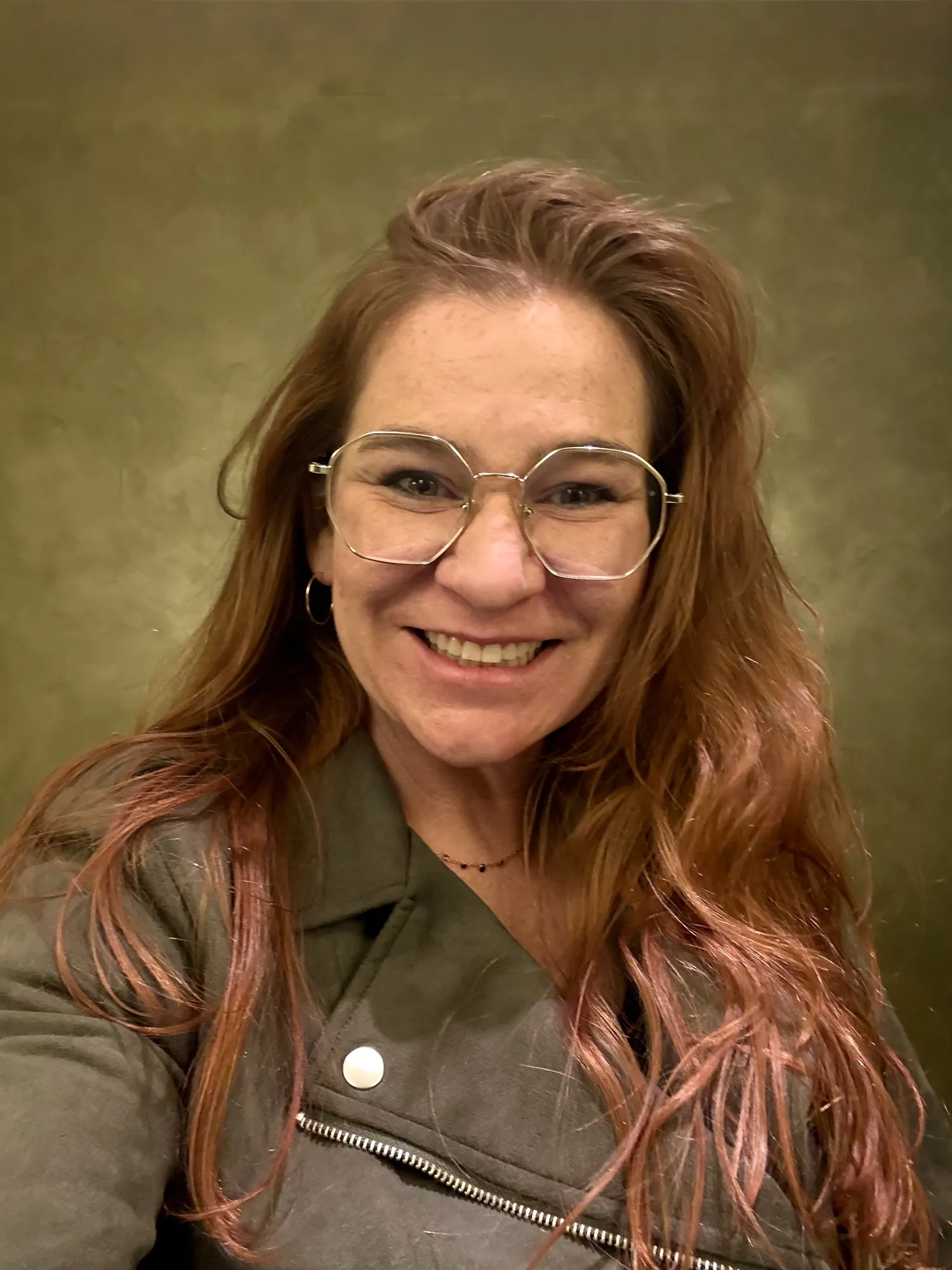
"Our April GVL Connect conversation about freedom was one of the nights I was most nervous to facilitate, and one of the nights that reminded me exactly why these conversations matter."
Joanna Reese
The room was politically diverse. We had people who identified strongly with the political right, including someone aligned with South Carolina's Freedom Caucus; people who openly described themselves as socialists; libertarian voices; moderates; and plenty of people who did not fit cleanly into a political box.
GVL Connect is built for exactly that kind of room. You do not have to share anyone else's politics. You do have to show up committed to curiosity, conversation, and connection rather than trying to win an argument.
So I pulled out the whiteboard, wrote one word in the middle, FREEDOM, and asked the easiest question of the night: How many of you believe freedom is an essential American value?
Every hand went up. Then came the real question: freedom to do what? Freedom from what? And what happens when my freedom begins restricting yours?
Almost everyone says they believe in freedom. The hard work begins when we ask whose freedom we mean.
The Aspiration: Freedom Was Never Finished
Freedom sits at the center of the American story, but it has always been an aspiration before it was a complete reality.
The Declaration of Independence speaks of unalienable rights (life, liberty, and the pursuit of happiness) and says governments are instituted to secure those rights. The Bill of Rights, ratified later, protects specific liberties against government interference, including speech, religion, press, assembly, due process, and the right to keep and bear arms.
Read the Declaration of Independence at the National Archives.
Explore the Bill of Rights at the National Archives.
But the country that wrote those words did not offer meaningful freedom to everyone. Slavery remained embedded in American life. Enslaved people could be bought, sold, separated from their families, forced to labor, and denied control over their own futures. Their children could be born into the same condition.
That contradiction is essential to understanding this entire American Values series. The founding language often described where America claimed it wanted to go more clearly than it described the country that actually existed.
"American freedom has always been an aspiration before it was a reality."
Joanna Reese
Freedom Expanded Because People Kept Reinterpreting the Promise
The history of emancipation shows how slowly an aspiration can become lived reality, and how leaders themselves can evolve.
Abraham Lincoln opposed slavery, but the Smithsonian's National Museum of American History notes that he did not initially align himself with abolitionists demanding its immediate end. His approach changed during the Civil War. The Emancipation Proclamation, effective in 1863, declared enslaved people in areas then in rebellion against the United States to be free.
Read the Smithsonian's history of Lincoln and the Emancipation Proclamation.
The proclamation was a major expansion of freedom, but it did not abolish slavery nationwide. The 13th Amendment, ratified in 1865, did that. On June 19, 1865 (more than two years after the Emancipation Proclamation), U.S. troops arrived in Galveston, Texas, and General Order No. 3 announced that enslaved people there were free, the event commemorated as Juneteenth.
Read the National Archives on the 13th Amendment.
Explore General Order No. 3 and the history of Juneteenth at the National Archives.
Even legal emancipation did not instantly produce equal freedom in practice. The 14th Amendment extended citizenship, due process, and equal protection, and the 15th Amendment protected Black men's voting rights, yet Black Codes, segregation, disenfranchisement, violence, and Jim Crow continued to restrict Black Americans' freedom for generations.
Read the National Archives on the 14th Amendment and the long struggle to make its promise real.
That history matters because freedom is not something a society declares once and then owns forever. Laws change. Institutions change. Culture changes. Rights can expand, and rights can erode. Every generation has to decide what the aspiration requires in the world it inherits.
Government Is Not Automatically the Opposite of Freedom
One of the most useful tensions in our conversation was the assumption that government and freedom are natural opposites.
Government absolutely can restrict freedom. American constitutional protections exist in large part because the founders understood the danger of concentrated governmental power.
But the Declaration makes another argument too: governments are instituted to secure rights.
That means law can also be the mechanism that protects one person's freedom from another person's power. Laws against assault restrict one person's behavior to protect another person's body. Property law protects possession while limiting theft. Civil-rights laws restrict discrimination in certain settings in order to protect equal access. Constitutional law limits what government itself may do.
For me, that changes the question. Instead of assuming that every rule reduces freedom or every regulation protects it, we should ask what freedom the rule is protecting, what freedom it is limiting, and whether the balance is justified.
"Freedom is not simply the absence of rules. The challenge is building rules that protect as much freedom as possible for everyone."
Joanna Reese
Our Freedom Meets Someone Else's Freedom
We sometimes summarize this idea by saying that my freedom ends where yours begins. Real life is harder than that sentence, because the boundary is rarely obvious.
Almost every difficult freedom debate is really a collision between values or rights: speech and safety, religious exercise and equal treatment, gun ownership and public safety, bodily autonomy and concern for developing life, election security and access to the ballot.
The useful conversation is not "Are you for freedom or against it?"
Almost nobody walks into these debates believing they are anti-freedom. People disagree about which freedom is most threatened, what counts as harm, and what limits are justified.
That is why binary labels can make us less intelligent about the very freedoms we are trying to protect.
Guns: The Right to Bear Arms and the Right to Be Safe
The Second Amendment protects the right to keep and bear arms. That is part of our constitutional framework, and many Americans understand firearm ownership as connected to self-defense, independence, and protection from coercion.
But constitutional rights are also interpreted within a legal system that has always wrestled with competing safety concerns. In 2024, for example, the U.S. Supreme Court held in United States v. Rahimi that a person subject to a qualifying domestic-violence restraining order based on a credible threat to an intimate partner could, consistent with the Second Amendment, be temporarily prohibited from possessing firearms.
Read the U.S. Supreme Court's decision in United States v. Rahimi.
Public opinion is also less binary than our political language suggests. Pew Research Center has found broad support across party lines for some gun restrictions, even while major partisan disagreements remain on others. In its 2024 summary, Pew reported large majorities in both parties supporting a minimum purchase age of 21 and restrictions on gun purchases by people described in the survey as having mental illnesses, while proposals such as bans on assault-style weapons remained much more divided.
Explore Pew Research Center's data on Americans and gun policy.
And the safety concern is not imaginary. A 2024 Pediatrics study examining school-shooting datasets reported that the United States had experienced 57 times as many school shootings as all other major industrialized nations combined over the period studied.
Read the Pediatrics research on U.S. school shootings.
As a mother with children in elementary, middle, and high school, that part is not abstract to me. When Greenville County Schools shows up on my phone, I answer. School threats are part of the reality our children are being asked to navigate.
I do not think the useful question is whether America must choose between the Second Amendment and children's safety. The useful question is harder: how do we protect lawful self-defense and constitutional rights while also protecting people from preventable violence?
Different people will draw that line differently. That is exactly why we need the conversation.
Marriage: Religious Freedom and Civil Freedom
Marriage gives us another example where freedom can mean different things to different people.
Americans have the freedom to hold sincere religious and moral beliefs about marriage. The government also regulates civil marriage because marriage affects taxes, inheritance, healthcare decisions, property, parental rights, benefits, and hundreds of other legal consequences.
In Obergefell v. Hodges, the Supreme Court held that same-sex couples have a constitutional right to marry, while also explicitly acknowledging that many people hold sincere religious or philosophical objections to same-sex marriage. Congress later passed the Respect for Marriage Act, which requires federal recognition of valid marriages and recognition across state lines while also including protections for religious organizations.
Read the Supreme Court's Obergefell decision.
Read the Respect for Marriage Act.
That is the freedom tension in a sentence: people can be free to believe different things without automatically giving any one person the power to impose every private belief through civil law.
Where that boundary belongs is a legitimate subject for democratic debate. Pretending only one side cares about freedom is not.
Abortion: The Labels Hide the Hardest Questions
Abortion may be the clearest example of how loaded language turns a complicated freedom question into two caricatures.
"Pro-life" and "pro-choice" sound like opposites. Real human beings often hold values that do not fit neatly inside either label.
Personally, I care about a woman's ability to make decisions about her own body, health, and future. I also care about protecting life. Those concerns can coexist, and when they collide, the questions become difficult very quickly: gestational stage, maternal health, rape, incest, fetal viability, severe medical complications, personal conscience, and the role of government.
Polling reflects that complexity. In Gallup's May 2026 survey, 33% of Americans said abortion should be legal under any circumstances, 48% said it should be legal only under certain circumstances, and 17% said it should be illegal in all circumstances. The largest group was not at either absolute end.
Explore Gallup's 2026 abortion polling.
Pew's 2026 research found a similar complexity from another angle: 60% said abortion should be legal in all or most cases, while 38% said illegal in all or most cases. Pew also found that roughly a third of Americans said both the idea that the decision should belong to the pregnant woman and the idea that an embryo has rights described their views at least somewhat well.
Read Pew Research Center's 2026 abortion research.
That is exactly why I resist language that tells us everyone on one side hates women or everyone on the other side hates babies. Those claims may generate outrage, but they do not help us solve the actual moral and policy questions.
The freedom conversation asks us to listen long enough to understand what another person is trying to protect, even when we ultimately disagree with where they draw the line.
The Freedom to Choose Our Government
Political freedom also includes the ability to participate meaningfully in choosing our representatives. But even here, the word "choice" has layers.
The United States does not elect presidents through a national popular vote. The Electoral College is the constitutional mechanism, and the National Archives notes that in 2000 and 2016 the candidate who won the presidency received fewer votes nationwide than the principal opponent.
Explore the National Archives history and FAQ on the Electoral College.
That does not mean those elections were outside the constitutional system. It does raise a legitimate philosophical question for a conversation about freedom: how should political choice be structured, and what does meaningful representation require?
Campaign finance creates another layer. I had heard Citizens United described as if it legalized unlimited corporate donations or bribery. That is not accurate. The 2010 Supreme Court decision protected independent political expenditures by corporations and unions; federal law still prohibits corporations from making direct contributions from treasury funds to federal candidates.
Read the Federal Election Commission's summary of Citizens United.
People can reasonably disagree about whether unlimited independent spending protects political speech, magnifies the influence of wealth, or both. But we should at least argue about what the law actually does.
Voter-registration rules create the same kind of balancing problem. Recent federal proposals have sought stronger documentary proof of citizenship for federal voter registration. Supporters frame those requirements as election-integrity protections. Critics argue that documentation requirements can impose unnecessary burdens on eligible citizens, particularly people whose current legal names do not match older documents. FactCheck.org found that the 2025 SAVE Act did not simply bar married women whose names differed from their birth certificates; it directed states to create a process for mismatched names, though questions remained about what documentation would be required.
Read FactCheck.org's analysis of the SAVE Act and name changes.
Again, the freedom question is not solved by shouting "security" or "suppression." The real work is deciding how to verify eligibility and protect confidence in elections without unnecessarily obstructing eligible citizens from participating.
Freedom of Mind Matters, Too
Not every threat to freedom comes from government.
An abusive partner can restrict choices. An employer can exert power. A private platform can shape which information reaches us. Algorithms can narrow what we see. Social pressure can punish people for asking questions. Money and market power can expand some people's choices while leaving others with very few realistic options.
That is one reason our earlier GVL Connect conversation about loaded language matters here. Freedom of thought depends on being able to learn, question, reconsider, and change our minds without being forced into a prepackaged identity.
Calling someone a traitor, extremist, baby-killer, fascist, socialist, groomer, gun nut, or any other totalizing label may feel satisfying, but it can end the inquiry before it begins.
Freedom of mind requires enough curiosity to ask: What does this person actually believe? What freedom are they trying to protect? What evidence are they using? Where might their solution restrict someone else?
The Moment That Stayed With Me
At the end of the evening, one participant who had identified himself as strongly conservative pulled me aside.
I am paraphrasing rather than quoting him, but the substance of what he told me was that he had never really considered that some positions he had long understood as defending freedom could simultaneously reduce someone else's freedom.
He did not announce that he had changed political parties. He did not suddenly agree with everyone else in the room. That was not the point.
He saw another person's liberty more clearly than he had before.
To me, that was the entire experiment working.
The goal of a conversation like this is not ideological conversion. It is expanding the number of human beings whose freedom we remember to count.
Freedom on Paper and Freedom in Practice
There is one more layer that our Independence conversation had already started to uncover.
A person can possess a legal right on paper while having very little practical ability to exercise it.
A child may technically be free to dream of college, a career, travel, entrepreneurship, or any other future. But a child growing up hungry, unsafe, without stable housing, healthcare, transportation, or adequate education may have far fewer realistic choices than another child with all of those supports.
That does not make every unequal outcome a violation of freedom, nor does it tell us exactly which institution should solve every problem. It does give us another question to ask: if freedom is an American aspiration, are we creating conditions that allow more people to develop genuine choices over their own lives?
Formal freedom matters. Practical agency matters too.
So What Does Freedom Ask of Us?
By the end of the night, nobody had stopped valuing freedom.
But freedom had become much harder to use as a political slogan.
It was no longer enough to ask whether a policy gave me more freedom. We had to ask what it did to everyone else in the system.
Does it protect someone from coercion? Does it prevent harm? Does it preserve meaningful choice? Does it impose a burden on someone else? Is that burden necessary to protect another right? Would I accept the same rule if it were being applied to a person or group I cared about?
Those questions do not produce automatic answers. That is the point.
A free society is not one in which every person gets to do anything they want. It is one continually negotiating how to protect the widest possible sphere of human choice while preventing one person's power from erasing another person's rights.
Government can threaten that freedom. Government can also protect it. Families, corporations, communities, religions, technologies, and individuals can do the same. Our job is not to pledge allegiance to the word "freedom" and then assume our preferred policy owns it.
Our job is to keep asking whose freedom is expanding, whose freedom is shrinking, and whether we are moving closer to the American aspiration of liberty for all.
Joanna takes a consultant-first approach to real estate, helping clients sort through complex questions and plan ahead, often long before they are ready to list or buy.